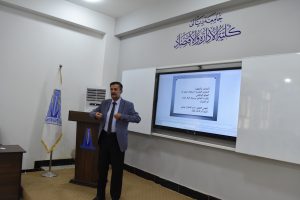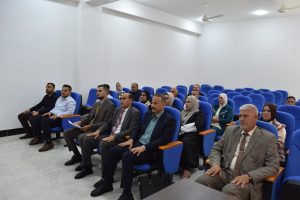
The College of Administration and Economics holds a workshop on “Steps and Methods for Identifying and Addressing Corruption, and Their Impact on Protecting Public Funds”
Corruption is defined as the abuse of entrusted power for personal gain. It erodes trust, weakens democracy, hinders economic development, and exacerbates inequality, poverty, social division, and environmental crises. Corruption can only be uncovered—and those responsible held accountable—if we understand how to identify it. As for “public funds,” the term refers to any assets or resources—whether financial, human, material, or technical—allocated to government-sector entities to support their various activities.
The workshop aimed to examine the impact of corruption on individuals. The prevalence of favoritism and nepotism deprives qualified, competent people of their rights, leading to positions being filled by the wrong individuals, lower income levels, and increased poverty. Corruption drains financial resources and drives up inflation and prices, thereby diminishing the purchasing power of individuals. It also undermines trust in institutions and stunts both economic development and the social fabric. The squandering of public funds and poor planning result in the deterioration of essential infrastructure (such as healthcare, education, and roads), lower economic growth rates, and rising unemployment.
The workshop recommended adopting specific methods and approaches to combat corruption, focusing on institutional and oversight mechanisms. This includes empowering independent bodies—such as the Federal Board of Supreme Audit and federal integrity commissions—to pursue cases of illicit enrichment. Legislative and legal reform involves enacting stringent legislation and updating laws to criminalize corruption and close legal loopholes, while ensuring swift and fair trials for those who engage in corrupt practices.
The workshop addressed the sixteenth of the seventeen Sustainable Development Goals (Peace, Justice and Strong Institutions) by promoting the establishment of peaceful and inclusive societies for sustainable development, ensuring access to justice for all, and building effective, accountable institutions at all levels.
Send feedback