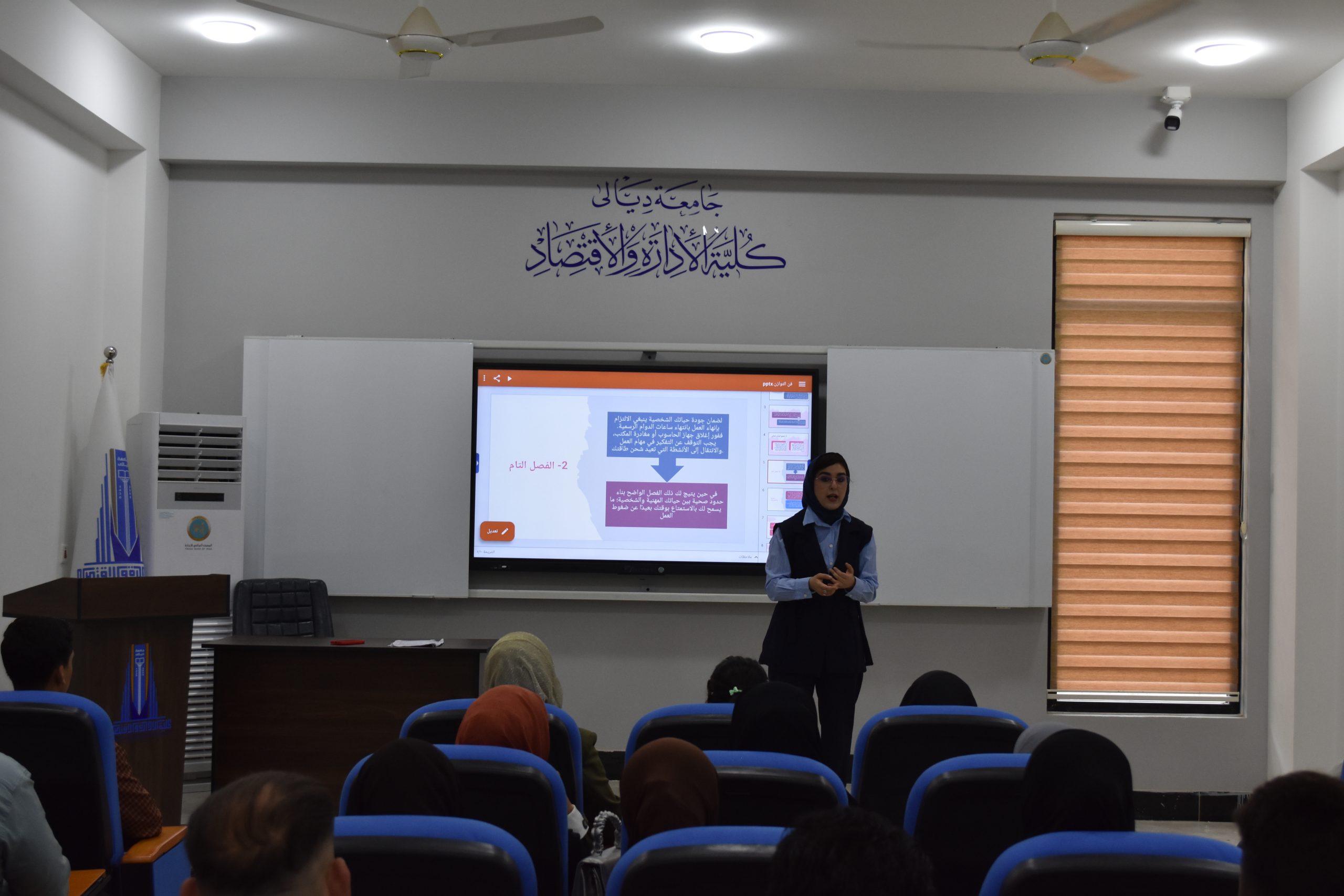
This lecture aims to highlight the challenges of modern life and the pressures women face, espe
cially working women. Trying to accomplish everything perfectly can be exhausting and may cause
 psychological distress, whether they are working women or homemakers. Therefore, there are way
s to help women manage their time, or at least accomplish what is necessary. These include focu
sing on essential tasks that can be completed as quickly as possible, postponing less important
 ones, creating a daily schedule with a focus on achieving acceptable and effective results, an
d maintaining a clear separation: women must completely separate work and family life and not i
nvolve their families in matters that might consume their time.
She should dedicate time to her family, attend to their needs, and listen to their problems and
 desires to avoid creating a gap between herself and her children. Regarding activity and relax
ation: a woman should allocate time for relaxation, such as reading books and novels, going for
 walks with the family, or having some time alone to develop her talents.